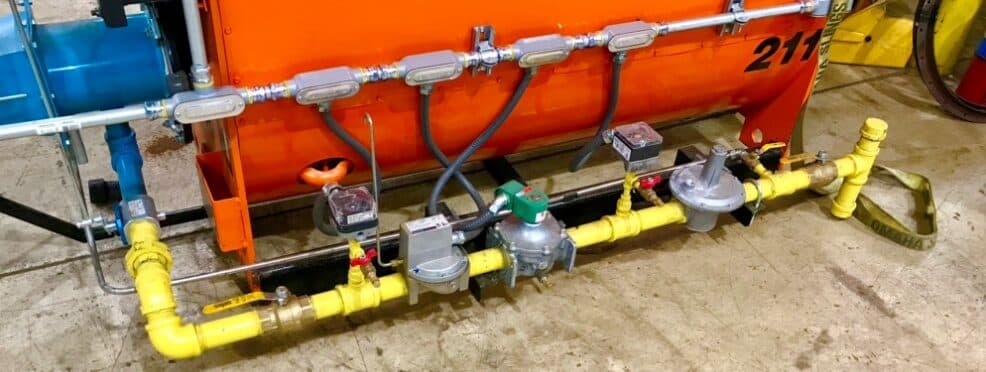
A gas train is designed to allow for the safe flow of propane or natural gas to your burner. These systems have become more complex over the years as equipment has increased in size and safety has become more of a priority. Depending on the size of the system and your local governing body, you may have different requirements for your system. Below are a few common components found in a gas train and their functions.
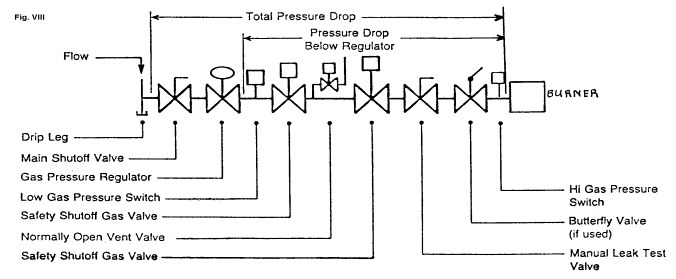
Picture Courtesy Of Industrial Controls
1. Drip Leg
Also known as a sediment trap or a dirt leg. This section of piping is designed to prevent any sediment that may be in the fuel from entering the system. This is necessary because as energy company repair buried lines, dirt or sand often gets into the piping.
2. Manual Gas Shut Off Valve (MSOV)
This is a manually operated valve that allows you to shut off the gas supply to the system. Every system should have one of these valves present.
3. Natural Gas Filter Or Strainer
While these are not on all gas trains, they act as a second line of defense to prevent impurities from entering the system.
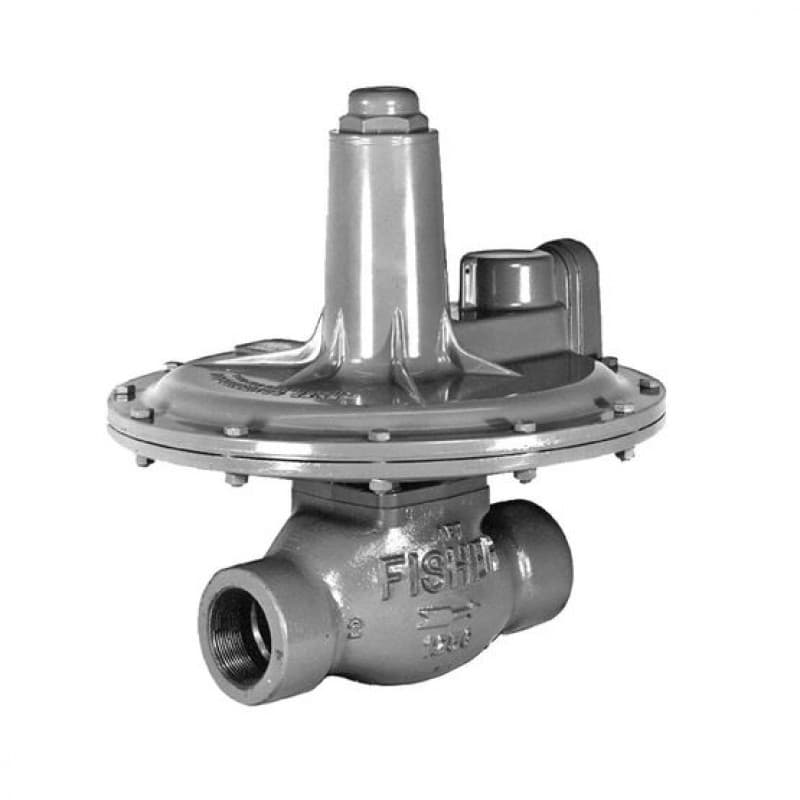
Fisher Pressure Reducing Valve
4. Pressure Reducing Valve Or Gas Pressure Regulator
The pressure of the gas coming into the gas train is often higher than the required pressure for the burner. In this situation the pressure needs to be reduced. This device regulates the pressure of the fuel to an acceptable level so the burner can operate efficiently.
5. Low Gas Pressure Switch
This switch is usually wired to the flame safeguard and will lock out your burner if the fuel pressure becomes too low.
6. Vent Valve
The vent valve (also known as the normally open vent value) is usually found between the upstream and downstream shut off valves. As power to the burner is off, this solenoid valve opens. If there were to be a leak when the system is off, the gas will be vented through this valve. As power is restored to this valve closes and allows gas to flow back into the combustion chamber.
7. Safety Shut Off Valves (SSOV)
These safety valves are a critical part of the gas train and may be a single electric valve or two redundant electric valves. They are used to prevent the flow of gas into the combustion chamber when equipment is shutdown. These valves also often come with a proof of closure system, which allows operators to proceed with confidence.
8. Leak Test Valve
This valve comes directly after the Safety Shutoff Valve and allow you to determine if any seals are not closing properly. Leaks tests should be performed annually and are required by most regulatory bodies.
10. Firing Rate Valve
This valve has a motor that is controlled by boiler pressure or temperature and controls the amount of fuel that goes into the burner. It also controls the amount of air going to the burner by regulating the damper.
11. High Pressure Switch
This switch will lock out your burner if the pressure of gas becomes too high.
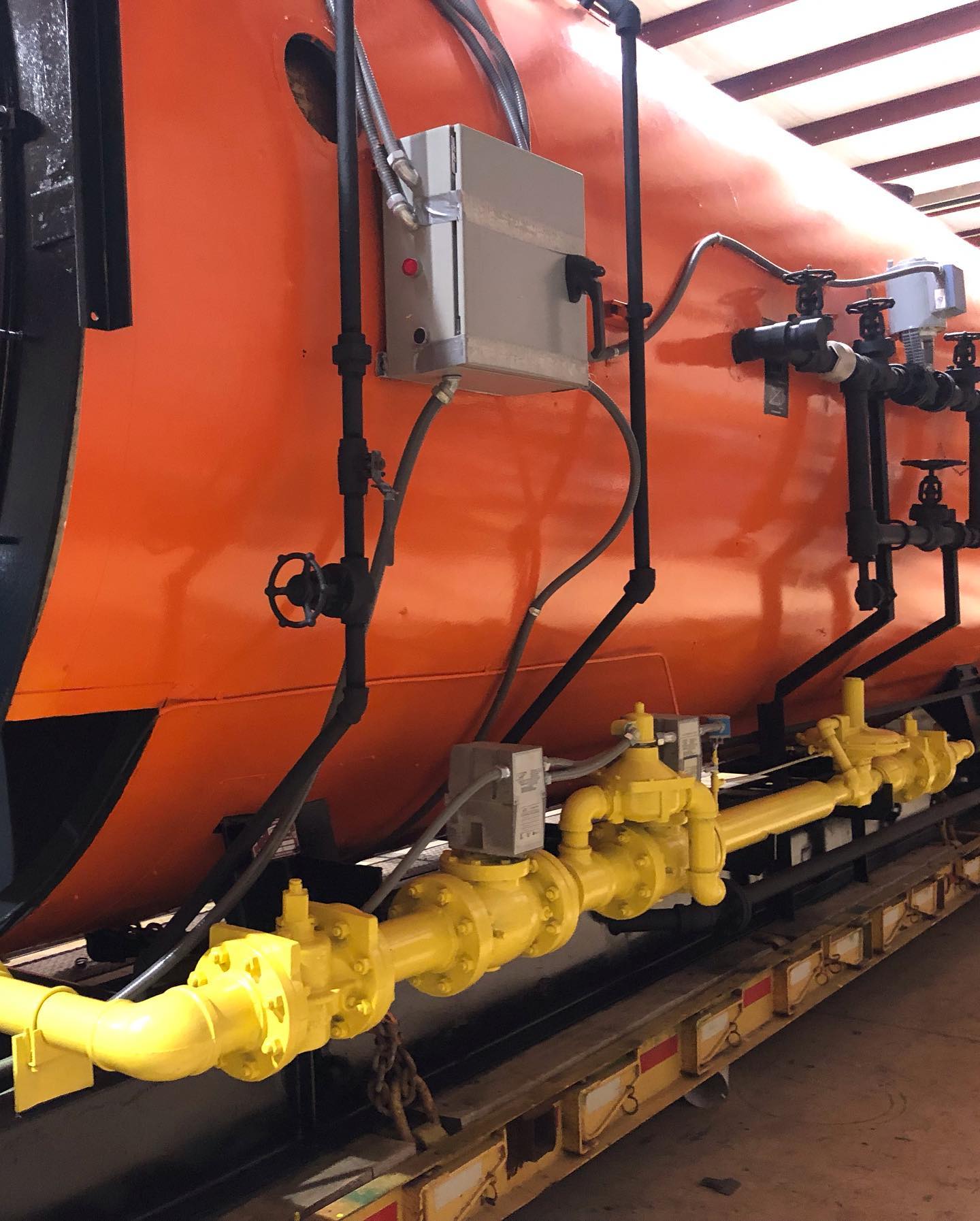 Gas Train Maintenance
Just like any piece of equipment these systems will experience wear and tear over time. Valve seals may wear down, linkages may loosen or safety devises may even be bypassed by operators in some cases. All of these are good reasons to perform maintenance checks on your gas train.
Perform leak tests on your gas train annually. Start by using your leak test valve. This involves hooking a hose up to the valve and submerging the other end of the hose in a bucket of water. If the safety shut off valve is closed and bubbles are observed, you may have leak. You should also run a leak detection tool over the gas train to try and detect any leaks at connections. If you believe you have found a leak, perform a bubble test to confirm the leak is present.
Inspecting Your System
The National Board of Boiler and Pressure Vessel Inspectors recommends a technician perform inspections on your system. In an article they discuss hazards caused by not performing proper inspections:
“Natural gas and combustion equipment safety continues to be considered a black art by many. Most sites have personnel that are not adequately trained in either the safe start-up/shutdown of equipment, daily operations, or proper testing and maintenance. Our firms’ survey of industrial users found that less than 10 percent actually perform manufacturer or code required preventive maintenance. This includes testing of critically important safety interlocks. The combination of these two circumstances can spell disaster – and it has in numerous facilities.”